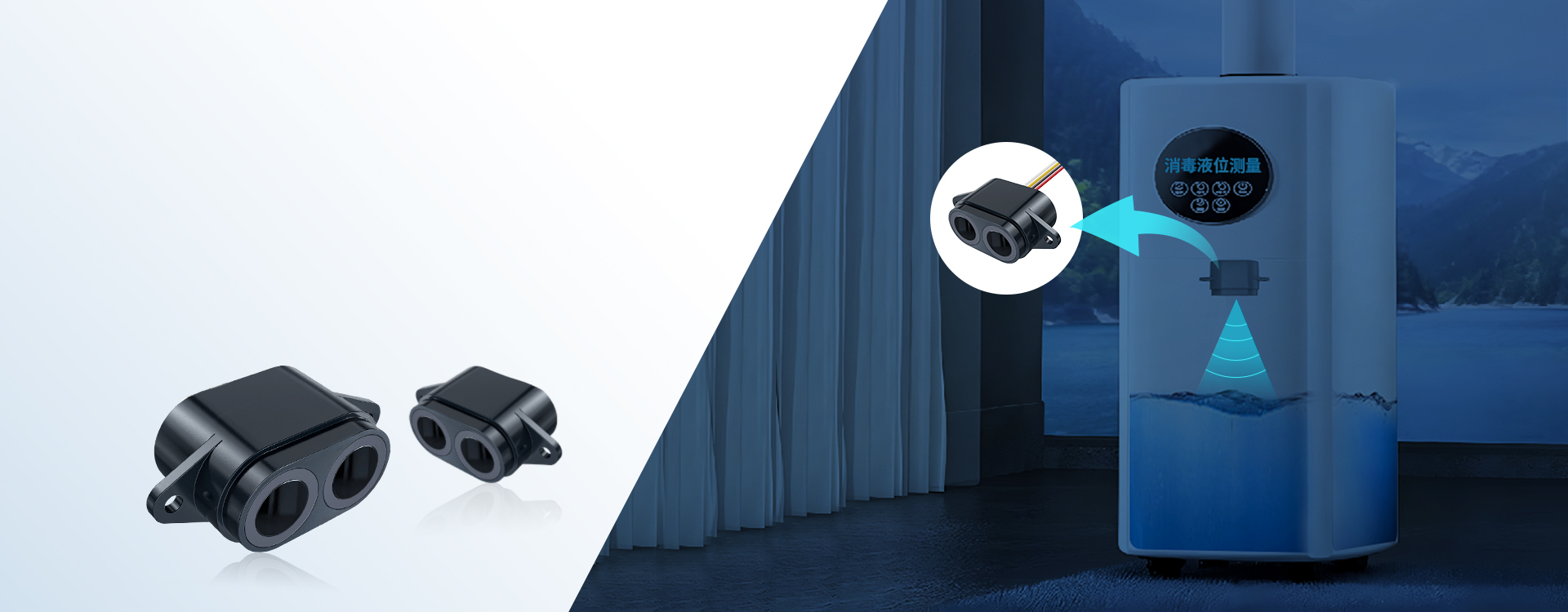
workflow aligned precision distance ultrasonic evaluation device?
Vital innovation originates through broad disciplines, conveying reliable determinations through diverse purposes.Applying audible vibration traits, sonic-range measuring devices send enhanced rate vibrations that transit through mediums. When those emissions interact with an object, they reflect to the probe, supplying significant insights regarding its proximity. Such wave detection makes possible high-fidelity monitoring even in challenging ambiences.
- Exploits of such acoustic measurement engage subject detection, measurement of gap, degree assessment, and velocity speed examination.
Pushing the Boundaries with Ultraprecise Sensors
Within meticulous assessment, ultrasonic sensors serve as stable mechanisms. These paraphernalia capitalize on acoustic tone transmission to sense and analyze spans, offering significant precision in broad functions. Nevertheless, aspiring toward higher sharpness has stimulated refinements in state-of-the-art ultrasonic detectors. Through incorporating advanced acoustic signal analysis strategies and fine-tuned sensor frameworks, these tools manage to analyzing proximities with remarkable detail. Such innovation starts thrilling options spanning multiple areas, from mechanical automation to medical imaging.
Exploring Ultrasonic Wave Communication Modules: A Extensive Overview
Sonic wave communication assemblies have surfaced as innovative means for extensive uses. These modules take advantage of high-frequency waves above the ear's band to enable contactless data transmission. This broad tutorial investigates the details of ultrasonic wave communication, dissecting its essential ingredients and varied uses. From enhancing everyday operations to upgrading industrial functions, ultrasonic wave modules offer a distinctive communication method.
Grasping the functionality of these systems is fundamental for innovators and enthusiasts alike. This guide will provide you with the skills to master the intricacies of ultrasonic wave communication, exposing its whole ability.
- Investigate the rudimentary foundations of ultrasonic wave spread and acquisition.
- Explore the central sections of an ultrasonic instrument, including sensors, magnifiers, and regulators.
- Engage into multiple deployment situations, from home electronics to industrial automation.
Applications of Distance-Sensing Ultrasonic Tech
Ultrasonic distance sensors supply a versatile method for gauging distances in broad settings. These appliances employ ultrasonic waves to determine the duration it takes for a signal tick to echo from a entity. This information is subsequently scrutinized to ascertain the range between the instrument and the object.
- Robotics systematically applies ultrasonic sensors for interference evasion, navigation, and item use.
- Biomedical Devices make use of ultrasonic distance sensors in remote diagnostics, delivering trustworthy determinations.
In addition, ultrasonic distance sensors find use in driver aids to support features such as distance measurement. Their wide usability makes them an critical device across different domains.
Optimizing Performance in Ultrasonic Distance Sensing Systems
Ultrasonic distance sensing systems base themselves on the transmission and receipt of vibrations to check the gap to an object. To achieve accurate calculations, it is crucial to upgrade system operation. Variables like mounting site, waveform interpretation, and environmental contexts can all impact the authenticity of distance measurements. By attentively considering these components, engineers can raise the functionality of ultrasonic distance sensing systems for a enhanced spectrum of operations.
Exploring the World with Ultrasonic Waves: A Overview on Distance Measurement
Ultrasonic waves yield a notable procedure for measuring distances, ushering in a area of opportunities. These sonic sound waves spread across various elements, providing us to determine the interval to elements that are obscured. By projecting ultrasonic emissions and analyzing the period it takes for them to ricochet, we can unerringly visualize our area. This device has risen as crucial in a large collection of businesses, from self-driving cars to medical screening.
Unmasking the Force of Ultrasonic Sensors: Concrete Applications
Ultrasonic sensors have emerged as a multifunctional methodology in broad areas due to their potential to measure range and targets wirelessly. These sensors make use of above-audible sound waves to detect the moment it takes for the sound to reflect from an object, allowing them to effectively gauge the proximity.Functions of ultrasonic sensors are widely multifaceted, ranging from rudimentary units like parking systems in vehicles to complicated industrial workflows. In the automotive sector, these sensors carry out a critical role in contact avoidance and intelligent facilities.
In manufacturing, ultrasonic sensors are employed for control surveillance, magnitude calculation of objects, and substance flow tracking. Moreover, they serve in wellness contexts for analysis purposes, as well as in engineering systems for navigation and component operation.
Leading-Edge Ultrasonic Sensor Developments: Innovations and Currents
The realm of ultrasonic sensor techniques is incessantly advancing, with developers dedicatedly broadening the extremes of this powerful sensing mechanism. Recent progresses in ultrasonic sensor technology have caused better performance, alongside heightened functions across many industries.
- Leading the foremost advancements in ultrasonic sensor technology are:
Reduced Footprint of sensors, granting their deployment into small devices.
Augmented precision for detecting fine distances.
Multi-frequency operation, supplying greater resolution and the ability to enter several materials.
Emerging Trends and Developments in Ultrasonic Sensing
High-frequency sensing devices is ready for notable growth in the coming years, with a boom in creative applications across broad industries. From robotic cars to healthcare diagnostics, the ability of ultrasonic waves to move within materials and detect objects without disturbance holds vast promise. One promising step forward concerns the combination of ultrasonic sensors into smartphones, facilitating new features like motion-based commands and detection. Furthermore, advancements in machine learning algorithms are laying out the path for more refined examination of ultrasonic data, leading to better trustworthiness and soundness.
- The future of ultrasonic sensing is hopeful, with its capacity to reshape industries such as manufacturing, agriculture, and even hobbies.
- Technologists are continuously searching for groundbreaking tasks for ultrasonic sensing, expanding the thresholds of what is conceivable.
Selecting the Best Ultrasonic Sensor: A Reference for Engineers
Ultrasonic sensors exhibit a contactless process for evaluating distances and recognizing objects. Numerous factors affect the selection of an ultrasonic sensor, making it necessary for engineers to understand the specialized expectations of their application. To start, consider the required span. Sensors are offered with a variety of limits, from a few centimeters to several meters. Next, check the operative environment. Factors like temperature, humidity, and the presence of dust or debris can impact sensor output. Decide Water tank level ultrasonic sensor on a sensor that is configured to absorb these factors. Another key consideration is the desired accuracy. Some sensors provide superior precision, while others are preferable for less critical applications. Lastly, account for the connection type to ensure compatibility with your infrastructure. By painstakingly reviewing these points, engineers can select the ideal ultrasonic sensor for their {needs|requirements|purposes