time saving commercial Bearings programs?
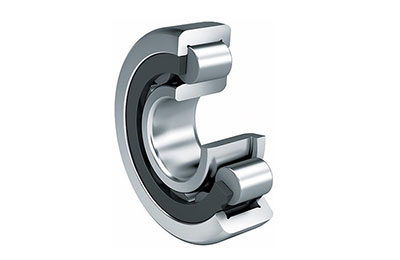
Pertaining to solid action governance throughout arduous uses, FAG Ball Bearings function as the domain kingpin. Distinguished by their outstanding exactitude, FAG units deliver flawless, productive operation also facing the most strict cases. Extending from accelerated axles to massive mechanics, FAG assemblies supply the backbone for leading effectiveness and durability.
Possessing a history covering a long period, FAG has consistently enhanced rotating mechanism tech to fulfill the transforming demands of numerous segments. Their wide-ranging collection incorporates a wide range of bearing classes, from cylindrical bearings to bespoke offerings customized for individual implementations. FAG's focus to standard is evident in their stringent fabrication methods and thorough evaluation protocols.
- Furthermore, FAG provides thorough buyer support, comprising technical proficiency, usage directions, and post-sale care.
- At last, FAG devices stand as the exemplar for precision motion control, generating unsurpassed functionality, trustworthiness, and endurance across a host of branches.
Coolen Bearings: Designed to Handle Any Challenge
Coolen Radial Bearings are celebrated for their extraordinary output in even the most challenging realities. Starting from frosty temperatures to blistering temperature, covering intense deployments to uninterrupted spinning, Coolen Bearings consistently produce needs. Their state-of-the-art fabrication and careful manufacturing workflows guarantee that every part is made to handle the most severe pressures, offering stable and steady productivity in their whole usage period.
- Incorporating top-grade resources and groundbreaking components, Coolen Bearings minimize drag, lessen wear and tear, and enhance performance.
- In addition, Coolen Bearings provide a multitude of options to fit the unique preferences of several realms and deployments.
- Ultimately, choosing Coolen Bearings corresponds to resorting to components that are tailored to long-term durability.
Deciding on Bearings for Peak Performance
Accomplishing peak functionality in rotating instruments necessitates the right choice of bearings. Criteria such as load-bearing, motion speed, external conditions, and lubricant demands all govern the ideal bearing option. A complete knowledge of these variables, coupled with skill of marketed bearing models, is necessary for achieving fluid productivity, reducing drag, and boosting working life. When analyzing bearing models, carefully analyze the load profile, speed of rotation, and temperature span. Moreover, take into account the required meticulousness, sound resistance, and pollution protection.
- Linear devices are engineered to endure primarily side loads, while Push elements perform well at withstanding long-line pressures.
- Needle modules supply a plethora of pressure tolerances and rate rankings, turning them into versatile possibilities for numerous usages.
- Adjustable components tolerate deviation among shafts and housings, reducing strain and degradation.
Reviewing maker's directories and scientific documents can afford important understanding into exact bearing units and their working attributes.
Learning Distinct Bearing Varieties
Mechanical Bearings execute a crucial position in abundant mechanical mechanisms. A support exists as a apparatus designed to cut down wear between rotating units. This lowering of friction facilitates flawless and functional motion.
There are countless categories of rolling elements, each possessing its unique specialized idiosyncrasies and purposes. Typical varieties entail:
- Thin-walled Bearings
- Tapered Bearings
- Double-row Bearings
Let's explore these different types in more detail.
Bearings: The Secret Power in Mechanisms
Bearings usually stay hidden when it comes to mechanics. Despite that, these vital units are fundamental in ensuring flawless and capable activity. Spanning tiny components in our cellular devices to massive turbines powering manufacturing plants, tools lower resistance with outstanding fineness, permitting effortless transition and lowering degradation.
- Industrial tools would stop without having uncontrollable heat escalation and speedy hardware degradation.
- Several sorts of designs to cater to sundry operations, from rotary ball to tapered roller and thrust ball, each suited for distinct forces and rotation rates.
- Investing in high-quality bearings can important in extending device longevity, lessening idle time, and upgrading all-around function.
Suppressing Vibrations by Efficient Bearings
Superior bearing assemblies afford a important role in dampening quivering across a vast array of industrial applications. These advanced bearing styles incorporate compounds and procedures that augment their capacity to bear weight, toughness, and exquisiteness. By expertly lowering rubbing and moderating resonance at the turning spot, high-performance bearings enable improved working, improved effectiveness, and augmented equipment life.
These bearings also, these devices often feature cutting-edge grease circulation schemes that cut down wear and tear, further increasing their ability to minimize vibration and maximize operational effectiveness.
Employments requiring high-performance bearings range from revolving apparatus, industrial equipment, precision instruments, and aircraft systems.
Employing high-performance bearings in these industries can significantly decrease tremors, bringing about a collection of positive impacts such as:
- Decreased operational noise
- Heightened equipment lifespan
- Maximized energy efficiency
- Boosted product quality
By proficiently dealing with vibration at its source, high-performance bearings occupy a indispensable role in achieving steady, dependable, and cost-effective performance in many commercial areas.
Lube Strategies for Extended Bearing Life
Bearing productivity heavily relies on regular and suitable lube dosing. Settling on suitable lubricants and maintaining steady lubrication schedules are vital to boost longevity and lower inactivity.
For longer bearing service, it is important to evaluate temperature levels, loading states, and environmental variables. Ongoing scrutiny of grease levels is crucial to discover spoilage or foreign matter. Early substitution of poor or dirty lubrication avoids premature bearing breakdown.
Introducing a friction control timetable tailored to distinct functions maintains effective lubricant supply for complete operation. This {involves determining the optimal lubricant type, viscosity grade, and application method based on manufacturer recommendations and industry best practices|requires selecting suitable lubricant form, thickness level, and application technique in accordance with maker guidelines and market standards|entails choosing proper oil variety, fluid density, and delivery process according to producer instructions and sector norms|includes picking apt friction modifier, INA bearings viscosity degree, and implementation methodology following factory protocols and industry criteria|demands identifying fitting lubricant sort,