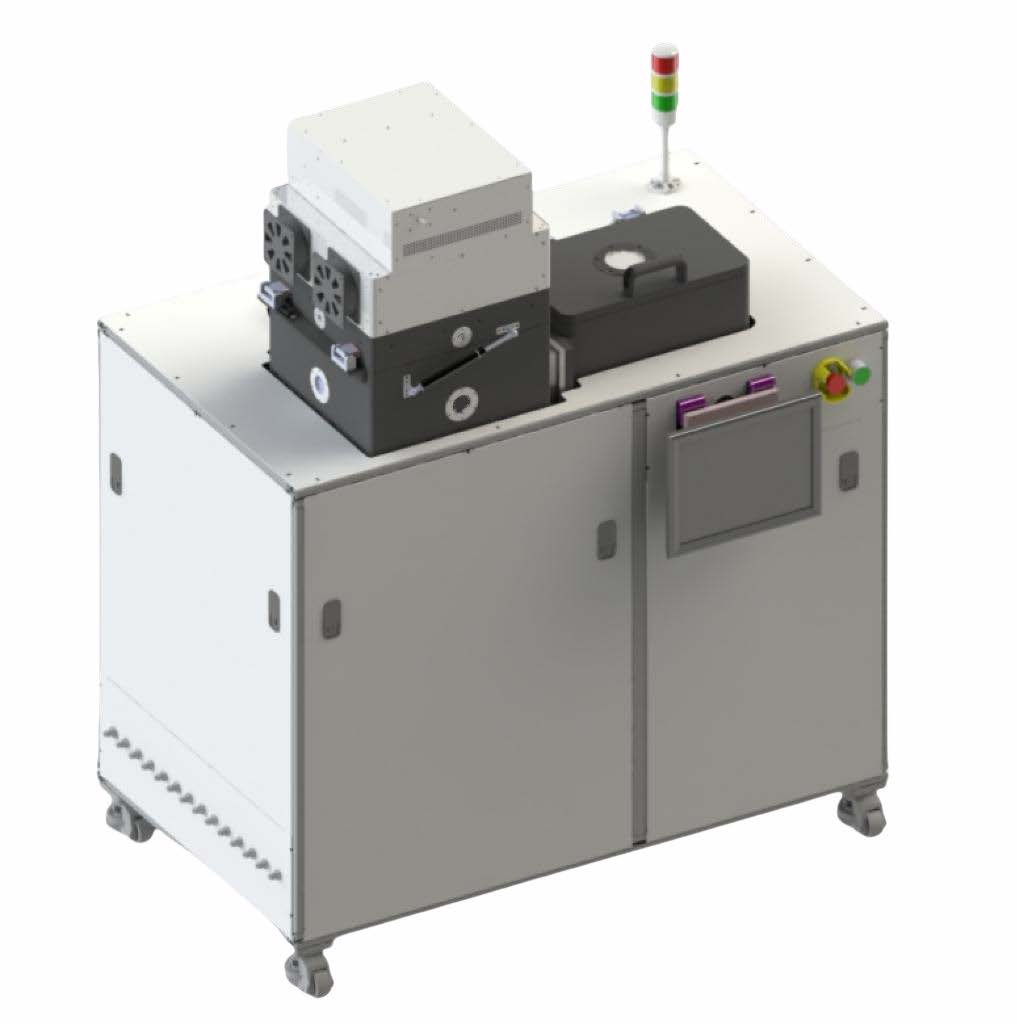
premium optimized rie etcher vendor managed programs?

Essentials of plasma treatment across chip production. This procedure exploits excited plasma to strategically clear material substances for precise patterning during miniature engineering. By regulating essential attributes like chemical makeup, power output, and ambient force, the etching pace, etch conduciveness, and pattern fidelity can be specifically adjusted. Ion-assisted etching has reshaped advanced electronics production, gauges, and other cutting-edge electronics.
- Furthermore, plasma etching is extensively explored for fields such as optics, medical fields, and substance study.
- Diverse styles of plasma etching are practiced, including chemical ion etching and inductively coupled plasma etching (ICP), each with specific strengths and constraints.
The sophisticated characteristics of plasma etching necessitate a detailed grasp of the core physical frameworks and chemical properties. This overview seeks to offer a complete survey of plasma etching, touching upon its central themes, manifold models, functions, favorable factors, complications, and forthcoming changes.
Riechert Systems for Exact Microfabrication
Regarding the field of precision engineering, Riechert etchers distinguish themselves as a foremost tool. These sophisticated devices are praised for their unrivaled precision, enabling the fabrication of complicated patterns at the minuscule level. By employing modern etching methods, Riechert etchers achieve faultless management of the manufacturing sequence, constructing excellent outcomes.
Riechert etchers operate in a extensive array of realms, such as digital devices. From producing microchips to designing groundbreaking medical gadgets, these etchers hold a pivotal position in defining the outlook of scientific progress . With commitment to mastery, Riechert establishes norms for exact microfabrication.
Reactive Ion Etching: Essentials and Usage
Ion-enhanced reactive etching is regarded as a important procedure in semiconductor fabrication. RIE leverages a fusion of charged species and reactive gases to etch materials with targeted removal. This mechanism necessitates bombarding the substrate surface with powerful ions, which affect the material to produce volatile reactive emissions that are then evacuated by a pressure device.
RIE’s competence in anisotropic profiles makes it uniquely advantageous for producing complex patterns in chipsets. Functions of reactive ion etching cover the fabrication of transistor elements, ICs, and optical systems. The technique can also fabricate deep trenches and contact holes for miniature memories.
- RIE approaches provide accurate management over material ablation and component selectivity, enabling the formation of complex features at ultrafine scale.
- Numerous plasma-reactive compounds can be deployed in RIE depending on the component material and needed process properties.
- The anisotropic quality of RIE etching permits the creation of steep edges, which is critical for certain device architectures.
Refining Selectivity in ICP Etching
Inductive plasma processing has developed as a fundamental technique for assembling microelectronic devices, due to its superior capacity to achieve intense directional removal and process specificity. The meticulous regulation of etching controls, including power control, atmospheric constituents, and applied pressure, facilitates the subtle regulation of material ablation speeds and structure designs. This versatility enables the creation of refined structures with negligible harm to nearby substances. By calibrating these factors, ICP etching can effectively mitigate undercutting, a habitual complication in anisotropic etching methods.
Assessment of Etching Process Performance
Electronic etching processes are frequently adopted in the semiconductor realm for fabricating fine patterns on substrates. This evaluation investigates different plasma etching practices, including chemical vapor deposition (CVD), to assess their functionality for various surfaces and needs. The assessment underscores critical variables like etch rate, selectivity, and surface detail to provide a in-depth understanding of the pros and shortcomings of each method.
Optimizing Plasma Conditions for Better Etch Performance
Ensuring optimal etching performance levels in plasma strategies calls for careful parameter manipulation. Elements such as current strength, gas formulation, and environmental pressure strongly impact the surface modification rate. By systematically refining these settings, it becomes achievable to increase etch efficacy.
Analyzing Chemistry in RIE
Ion-driven reactive plasma etching is a core process in microelectronics preparation, which includes the deployment of reactive energized particles to carefully ablate materials. The principal principle behind RIE is the collision between these dynamic ion beams and the component face. This interplay triggers molecular processes that destroy and dislodge constituents from the material, yielding a intended texture. Typically, the process applies a integration of reactive gases, such as chlorine or fluorine, which are ionized within the plasma vessel. These energetic ions attack the material surface, starting off the etching reactions.The effectiveness of RIE relies on various elements, including the form of material being etched, the adoption of gas chemistries, and the system controls of the etching apparatus. Fine control over these elements is imperative for ensuring outstanding etch structures and containing damage to contiguous structures.
Shaping Etch Outcomes in ICP Systems
Maintaining true-to-design and uniform outlines is vital for the functionality of countless microfabrication activities. In inductively coupled plasma (ICP) fabrication systems, modulation of the etch form is important in establishing dimensions and characteristics of items being assembled. Notable parameters that can be changed to impact the etch profile involve gas mixtures, plasma power, substrate temperature, and the masking setup. By accurately changing these, etchers can realize contours that range from rounded to precisely oriented, dictated by specialized application conditions.
For instance, sharply controlled etching is typically requested to create profound cavities or through-holes with precise sidewalls. This is executed by utilizing strong iodine gas concentrations within plasma and sustaining decreased substrate temperatures. Conversely, rounded etching produces smooth profile profiles owing to the typical three-dimensional character. This model can be useful for broad substrate processing or uniformity improvement.
Additionally, progressive etch profile techniques such as plasma pulsing enable the production of extremely precise and high, narrow features. These strategies generally need alternating between treatment stages, using a mixture of gases and plasma conditions to secure the desired profile.
Appreciating key elements that control etch profile control in ICP etchers is necessary for optimizing microfabrication techniques and realizing the targeted device output.
Plasma-Based Removal in Microelectronics
Plasma processing is a key strategy used in semiconductor assembly to sensitively reduce compounds from a wafer interface. This practice implements energized plasma, a fusion of ionized gas particles, to clear designated sections of the wafer based on their molecular profile. Plasma etching combines several strengths over other etching strategies, including high dimension control, which allows for creating slender trenches and vias with low sidewall corruption. This precision is essential for fabricating elaborate semiconductor devices with composite designs.
Uses of plasma etching in semiconductor manufacturing are numerous. It is deployed to develop transistors, capacitors, resistors, and other major components that compose the cornerstone of integrated circuits. In addition, plasma etching plays a crucial role in lithography systems, where it boosts the unerring patterning of semiconductor material to delineate circuit plans. The advanced level of control furnished by plasma etching makes it an necessary tool for cutting-edge semiconductor fabrication.
State-of-the-Art Etching Progress
Plasma etching technology undergoes continuous evolution, driven by the increasing plasma etching call for higher {accuracy|precision|performance