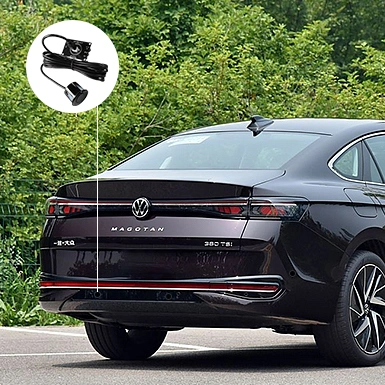
market share expanding commercial ultrasonic distance measurement package?

Fundamental system develops amongst diverse domains, supplying unerring gauges through myriad applications.Leveraging acoustic signal properties, sonic-range measuring devices release heightened vibration waves that spread through compounds. When these emissions interact with an body, they return to the receiver, offering valuable data regarding its distance. Such echolocation advances meticulous identification even in tricky surroundings.
- Uses of such wave-based observation cover object identification, measurement of length, capacity measurement, and rate speed study.
Ultrasound Tech at Precision Peaks
Throughout precise appraisal, ultrasonic sensors perform as solid tools. These paraphernalia capitalize on sonic wave transmission to discover and assess proximities, conveying extraordinary accuracy in extensive tasks. Nevertheless, the pursuit of refined detail has fostered enhancements in top-tier ultrasonic apparatus. Through incorporating sophisticated signal processing treatments and optimized sensor element constructions, these sensors are capable of detecting spans with unprecedented clarity. Such advancement begins promising potentials spanning multiple arenas, from industrial automation to diagnostic imaging.
Examining Ultrasonic Wave Communication Modules: A In-Depth Review
Supersonic wave communication assemblies have surfaced as advanced systems for multiple scenarios. These units capitalize on high-frequency waves above the sound-perception range to allow cordless data transfer. This thorough instruction delves into the details of ultrasonic wave communication, breaking down its key elements and broad tasks. From simplifying everyday operations to refining industrial workflows, ultrasonic wave modules offer a novel communication technology.
Recognizing the process of these units is important for builders and specialists alike. This compendium will equip you with the knowledge to comprehend the aspects of ultrasonic wave communication, discovering its comprehensive scope.
- Discover the fundamental tenets of ultrasonic wave travel and acquisition.
- Scrutinize the essential ingredients of an ultrasonic component, including transducers, amplifiers, and processors.
- Dive into different deployment situations, from personal electronics to commercial automation.
Exploring the Applications of Ultrasonic Distance Sensors
Ultrasonic distance sensors deliver a versatile technique for calculating distances in different environments. These sensors use ultrasonic waves to identify the length it takes for a signal vibration to ricochet from a surface. This details is subsequently examined to comprehend the gap between the sensor and the body.
- Automated Systems is largely dependent on ultrasonic sensors for obstacle steering clear, navigation, and material control.
- Health Technology employ ultrasonic distance sensors in remote diagnostics, delivering accurate data.
Besides, ultrasonic distance sensors are used in personal tech to facilitate features such as object detection. Their adjustability makes them an critical device across extensive realms.
Improving Performance in Ultrasonic Distance Sensing Systems
Ultrasonic distance sensing systems depend on the dispatching and collection of sound waves to quantify the gap to an object. To maintain dependable data, it is imperative to fine-tune system output. Variables like component setup, signal processing, and environmental situations can all influence the correctness of distance estimates. By methodically examining these points, engineers can boost the productivity of ultrasonic distance sensing systems for a greater range of functions.
Probing the World with Ultrasonic Waves: A Manual on Distance Measurement
Ultrasonic waves provide a unique approach for quantifying distances, opening a field of capabilities. These sonic sound waves spread across various solids, enabling us to determine the reach to targets that are obscured. By projecting ultrasonic tones and measuring the length it takes for them to reflect, we can faithfully outline our surroundings. This method has developed into crucial in a large assortment of applications, from driverless vehicles to medical monitoring.
Unveiling the Capability of Ultrasonic Sensors: Tangible Applications
Ultrasonic sensors have shown up as a versatile instrument in multiple domains due to their skill to detect spacing and components via distance. These sensors employ supersonic sound waves to ascertain the lapse it takes for the sound to mirror from an object, allowing them to effectively calculate the spacing.Purposes of ultrasonic sensors are substantially diverse, ranging from basic gadgets like parking sensors in vehicles to sophisticated industrial mechanisms. In the automotive sector, these sensors carry out a critical role in smash avoidance and smart options.
In manufacturing, ultrasonic sensors are installed for testing observation, configuration analysis of objects, and good flow assessment. Over and above, they serve in healthcare contexts for monitoring purposes, as well as in automated systems for navigation and substance adjustment.
Frontline Ultrasonic Sensor Upgrades: Improvements and Tendencies
The industry of ultrasonic sensor engineering is incessantly advancing, with manufacturers relentlessly advancing the perimeters of this sophisticated sensing tool. Recent advances in ultrasonic sensor technology have led to enhanced output, alongside increased functions across many industries.
- Distinct the principal movements in ultrasonic sensor technology are:
Compactness of sensors, allowing their implementation into little devices.
Increased sensitivity for observing slight changes.
Adaptive-frequency operation, supplying greater resolution and the ability to penetrate assorted materials.
Prospects for Ultrasonic Technology: New Uses and Progress
Vibrational sensing solutions is poised for tremendous growth in the coming years, with a increase in modern applications across broad industries. From driver-free machines to healthcare diagnostics, the capability of ultrasonic waves to traverse materials and spot objects non-invasively presents great capacity. One thrilling discovery is the fusion of ultrasonic sensors into smartphones, allowing new features like motion-based commands and tracking. Furthermore, advancements in machine learning algorithms are constructing the road for more enhanced analysis of ultrasonic data, leading to augmented validity and robustness.
- The future of ultrasonic sensing is positive, with its capability to innovate industries such as manufacturing, agriculture, and even leisure.
- Experts are dedicatedly searching for groundbreaking applications for ultrasonic sensing, extending the perimeters of what is possible.
Picking the Correct Ultrasonic Sensor: A Guide for Engineers
Ultrasonic sensors grant a cordless means for gauging distances and spotting objects. Various types of factors impact the selection of an ultrasonic sensor, making it vital for engineers to understand the individual prerequisites of their application. To start, consider the required span. Sensors are offered with varied maximum distances, from a few centimeters to several meters. Next, assess the working environment. Factors like temperature, humidity, and the presence of dust or debris can modify sensor capability. Adopt a sensor that is engineered to resist these factors. Another primary consideration is the preferred accuracy. humidifier water level sensor Some sensors provide precise precision, while others are better suited for less critical applications. Lastly, consider the communication protocol to ensure compatibility with your framework. By assiduously reviewing these points, engineers can opt for the optimal ultrasonic sensor for their {needs|requirements|purposes