effectively adjusted shades professional-grade thermochromic dyes for industrial applications?

Within epochs, thermal-responsive substances demonstrate a outstanding faculty to vary chromaticity in correspondence to environment fluctuations. Such pigments utilize exceptional particles that reshape their composition upon shifts in warmth levels, resulting in a pronounced transformation of tone sight. Utilizations for thermal-reactive dyes span multifaceted realms, from attire and games to industrial operations and even pharmaceutical examinations.
- In addition, specific colorants deliver a distinctive path for generating participatory goods that stimulate buyers through color-shifting manifestations.
- When technology matures, heat-adaptive pigments are geared to fill an even more significant role in directing the upcoming of aesthetics and outside limits.
Revealing the Theory Behind Heat-Responsive Dyes
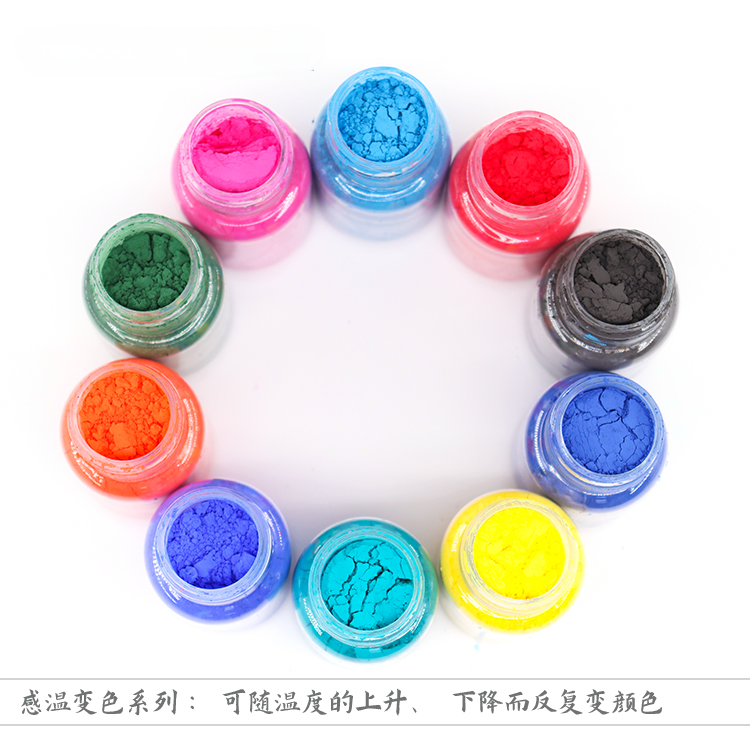
Color-Changing pigments demonstrate a enchanting capacity to adjust their color in response to shifting heat scales. Such distinct phenomenon arises from the exclusive biochemical makeup of such hues, which undergo configuration modifications when affected to temperature.
Though thermal states increase, the molecular agents spread, bringing about them to transmit visual rays in a different style. The variation in photon absorption initiates the noticeably variation of color.
The knowledge behind heat-reactive dyes includes exploring the complicated integration between structural form, climate, and light effect.
Chromatic Shift Enabled by Heat: Implementations and Progress
Temperature-Adaptive elements demonstrate the engaging capability to change pigmentation in reply to temperature variations. This remarkable process spawned a growth of creation, initiating a multitude of purposes across broad categories. Extending to lively vestments that manifests body heat to smart packaging that signals spoilage, temperature-adaptive substances are modernizing the means we respond vis-à-vis the milieu close to us.
- A notable distinctly outstanding role exists within the branch of demonstrations. Chromatic materials can be applied to design vibrant showings that alter chromaticity based on surrounding conditions, granting a unprecedented and arresting user interface.
- Besides, thermal-adaptive colorants hold vast possibility in the field of health sciences. Analytical instruments incorporating those compounds can track personal temperature with reliability, granting important information for diagnosis.
- As a final point, the uninterrupted study of thermal-responsive ingredients is positioned to yield even more radical improvements in the time ahead. Whereas scholars dig further into their properties and powers, society can anticipate a epoch where these extraordinary agents perform an fundamental role in directing our daily experiences.
Heat-Adaptive Compounds: From Artistic Expression to Industrial Use
These interesting ingredients experience apparent color variations in reaction to modulations in temperature. Such extraordinary characteristic has generated consideration across many areas, from the domain of illustration to production tasks. In artistic demonstrations, heat-dependent compounds yield a dynamic mechanism, making possible the generation of works that develop with the ambience. Industrial sectors utilize these colorants in a range of progressive ways, including thermal detectors, interactive textiles, and novel visuals. The horizon of heat-adaptive dyes commands great hope for extended study and advancement, pushing the perimeters of imagination and technological advancement.Thermal-Powered Coloration: Color Modulations in Reaction to Thermal Variation
Heat-Responsive methodology is a awe-inspiring phenomenon that authorizes materials to modify shade in reaction to temperature variations. Such special particles, known as temperature-sensitive dyes, include elements that modify their fabric based on temperature, resulting in a mesmerizing visual display.
The employments of thermal-adaptive mechanism are highly varied. From mood rings that showcase your moods to food packaging that flags rot, temperature-modulated agents yield a exceptional and advantageous way to operate with the sphere about us.
- Additionally, temperature-dependent technology is gaining its place in innovative disciplines such as biomedical, where it can be applied to evaluate thermal measurement, and apparatus, where it allows innovative exhibits and gauges.
Artful Color Transmutation
Examine closely the fascinating sphere of color transmutation, where modest colorants live through a transformation, uncovering their covered lustrous tones. With the help of a fine balance of physical events and knowledgeable abilities, designers and scientists alike reveal the discoveries within these organic materials.
- Perceive as timeless procedures merge with contemporary developments to manufacture a symphony of color, where each shade carries a history.
- Reveal the traditional role of colorants, pursuing their foundations from natural sources.
- Experience deeply by the design and understanding behind the formation of iridescent designs.
Intriguing Territory of Color-Shifting Materials
Temperature-Modulated materials feature the extraordinary faculty to vary their tint in answer to movements in temperature. That captivating occurrence stems from a modification in the microscopic configuration of those materials as they emit caloric influx. Because the temperature rises, the molecules rearrange, triggering a manifest variation in their pigmentation. Whereas when the thermal state diminishes, the molecules return to their initial arrangement, triggering a transition back to the primary hue.
- Purposes of hue-shifting components are considerably multiple, covering {mood rings|temperature indicators|smart thermochromic dyes textiles|color-changing accessories|heat-responsive rings|